Romantic Heart: A Handwritten Font That Feels Like a Love Letter
If you’ve ever held a beautifully handwritten note—ink slightly uneven, letters leaning into each other with quiet confidence—you know the warmth and intimacy that only authentic script can convey. Romantic Heart captures that feeling precisely. It’s not just another decorative script font; it’s a thoughtful, expressive handwritten typeface designed to carry emotional weight without sacrificing clarity or versatility.
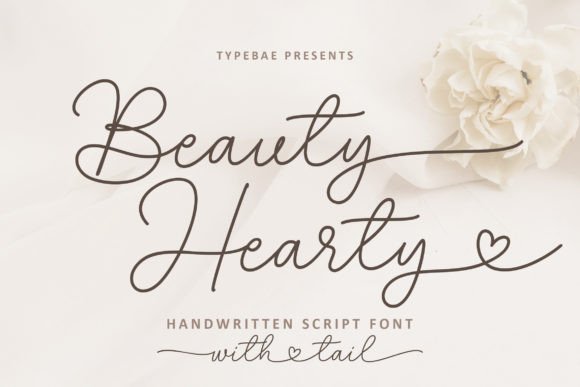
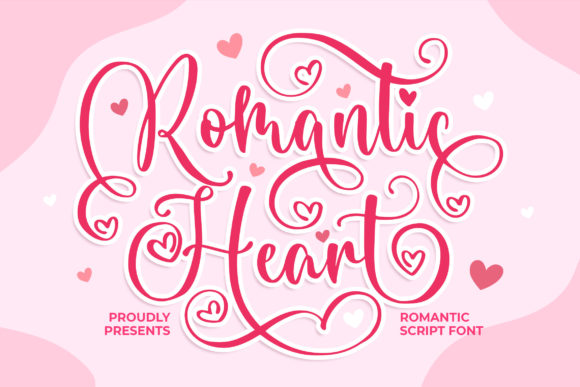
Visually, Romantic Heart balances elegance and approachability. Its strokes flow with gentle contrast—thick downstrokes meet soft, tapered upstrokes—and subtle flourishes appear where they feel earned, not forced. There are no exaggerated loops or theatrical swashes that distract from the message. Instead, Romantic Heart offers graceful entry and exit strokes, delicate ligatures, and a natural rhythm that mimics confident penmanship. It reads like something written with care—not rushed, not overly practiced, but sincere.
Where Romantic Heart Makes Real Design Impact
This isn’t a font you’d use for body text in a 50-page report—but that’s not its purpose. Romantic Heart shines as a display font, especially where tone and emotion matter more than sheer volume of text. Think wedding invitations where “forever” needs to feel tender, not typographic. Or boutique packaging where a hand-poured candle label says “made with love” and actually looks like it was.
It works exceptionally well across several practical contexts:
- Greeting cards and stationery: Its warmth invites connection before the first word is read.
- Social media graphics: Standout Instagram quote posts, Pinterest headers, or TikTok thumbnails benefit from its human scale and visual softness.
- Editorial design: Use it sparingly for pull quotes, chapter headings, or masthead accents in lifestyle magazines or indie zines.
- Logo design for small businesses: Especially for bakeries, florists, handmade jewelry brands, or wellness studios—places where authenticity and personal touch define the brand identity.
- Digital product assets: App splash screens, email headers, or limited-edition digital downloads gain personality when Romantic Heart sets the mood.
What makes Romantic Heart especially valuable is how it supports brand perception without demanding attention. Unlike loud, high-contrast display fonts, it enhances professionalism through restraint. A café using Romantic Heart on its menu board signals craftsmanship and care—not trend-chasing. A therapist’s website using it for a tagline like “you’re not alone” feels grounded and empathetic, not performative.
Readability, Hierarchy, and When to Hold Back
Handwritten fonts walk a fine line between charm and legibility—and Romantic Heart stays firmly on the readable side of that line. Its letterforms maintain consistent spacing and open counters (the enclosed spaces in letters like ‘a’, ‘e’, or ‘o’), which helps the eye track smoothly even at smaller sizes. That said, it’s still a script font, so avoid using it below 24pt in print or 28px on screen for primary headlines—and never for long paragraphs or interface labels.
For visual hierarchy, pair Romantic Heart with a clean, neutral companion. A well-chosen sans serif font—like Inter, Poppins, or Lato—creates balance: Romantic Heart brings voice and character; the sans serif delivers structure and breath. Avoid pairing it with other scripts or overly decorative serifs—they compete instead of complement. And skip ultra-thin or ultra-bold sans serifs unless you’re intentionally going for stark contrast (e.g., luxury cosmetics packaging).
You’ll also want to test how Romantic Heart behaves in your actual medium. On screen, some swashes may render inconsistently across browsers or devices—especially if embedded via CSS @font-face without proper fallbacks. For web use, consider serving it as SVG text for critical headlines, or use it in static hero images where rendering is fully controllable.
Getting the Most From Its PUA Encoding
Romantic Heart is PUA encoded, meaning every alternate glyph, discretionary ligature, and stylistic swash lives at a predictable Unicode location—not buried in obscure OpenType features. That’s huge for practicality. Whether you’re working in Adobe Illustrator, Affinity Designer, or even modern versions of Canva, you can access those elegant flourishes directly from your keyboard or glyph panel—no plugin or complex setup required.
Try swapping out standard “t” or “y” characters for their swashed variants in short headlines. Or replace the default “&” with Romantic Heart’s ornate ampersand—it adds nuance without overcomplicating layout. Just remember: less is more. One or two thoughtfully placed swashes often resonate deeper than a headline saturated with them.
Licensing, Fit, and Realistic Expectations
Romantic Heart is a commercial font, meaning it’s licensed for use in client work, products you sell, and public-facing branding—as long as you follow the license terms. Always verify whether your intended use (e.g., embedding in an app or SaaS platform) is covered. Most reputable sellers include clear licensing language; if it’s vague, ask.
Before committing, ask yourself three things: Does this project need emotional resonance? Is the audience likely to respond to warmth over authority or efficiency? And do I have control over size, color, and background contrast to support readability? If yes to all three, Romantic Heart is likely a strong fit.
Also consider alternatives—not because Romantic Heart falls short, but because context changes everything. For a tech startup rebranding with “human-centered values,” Romantic Heart might soften the messaging too much. But for a grandmother launching her heirloom cookie business? It’s exactly the kind of creative font that helps customers feel welcomed, remembered, and seen.
In the end, Romantic Heart doesn’t try to be everything. It’s not a system font. It won’t power your spreadsheet or your legal disclaimer. But when you need a voice that feels handwritten, intentional, and quietly confident—when you want typography to do more than communicate, but to connect—that’s when Romantic Heart earns its place in your toolkit.